Circle is Delivering on our Promises
Alaska’s fishermen have been squeezed from every direction for years — rising fuel costs, operating expenses that don’t move, and dockside prices set by processors that have little incentive to pay more. Meanwhile, the salmon sitting in grocery store freezers across the country often sat for days before being inadequately frozen, changed hands multiple times, had additives pumped into it, and lost quality at every step before it reached the consumer. The economics of Alaska’s wild seafood industry were — and largely still are — broken.
In August 2024, the New York Times published a detailed look at this crisis and featured Circle Seafoods as a company trying something different: freeze wild Alaska salmon whole, at ultra-low temperatures, within hours of being caught, and sell it at a price that doesn’t require consumers to choose between quality and their grocery budget. We were flattered to be included. But the real test wasn’t the press coverage — it was whether we could follow through.
Two years in, here’s where we stand:
The Alaska Salmon No One Wanted
The Times article covered the broad strokes of our approach, but it didn’t get into the most important detail: Circle’s focus is pink and chum salmon, species that have long been dismissed by processors and consumers alike. Historically, pink and chum were “garbage fish” — destined for dog food or the lowest-grade canned products, bought at prices that barely covered the fuel to catch them.
We believed that reputation was the product of poor handling, not poor fish. When pink and chum salmon are iced immediately after catch, frozen and held whole at ultra-low temperatures before deterioration can set in, it’s an excellent product — mild, clean, and genuinely wild. The challenge was proving it.
Our first season, while the Circle I barge was still being built, we worked with the Metlakatla Indian Community on Annette Island in Southeast Alaska. The community had a processing plant that had sat largely dormant and needed significant upgrades. We updated the delivery and freezer systems to meet our process standards, worked alongside the tribal council and community members, provided slush ice to fishing boats to protect quality from the moment of catch, and purchased salmon from local fishermen at above-market prices. The fish was frozen whole, right there in Metlakatla.
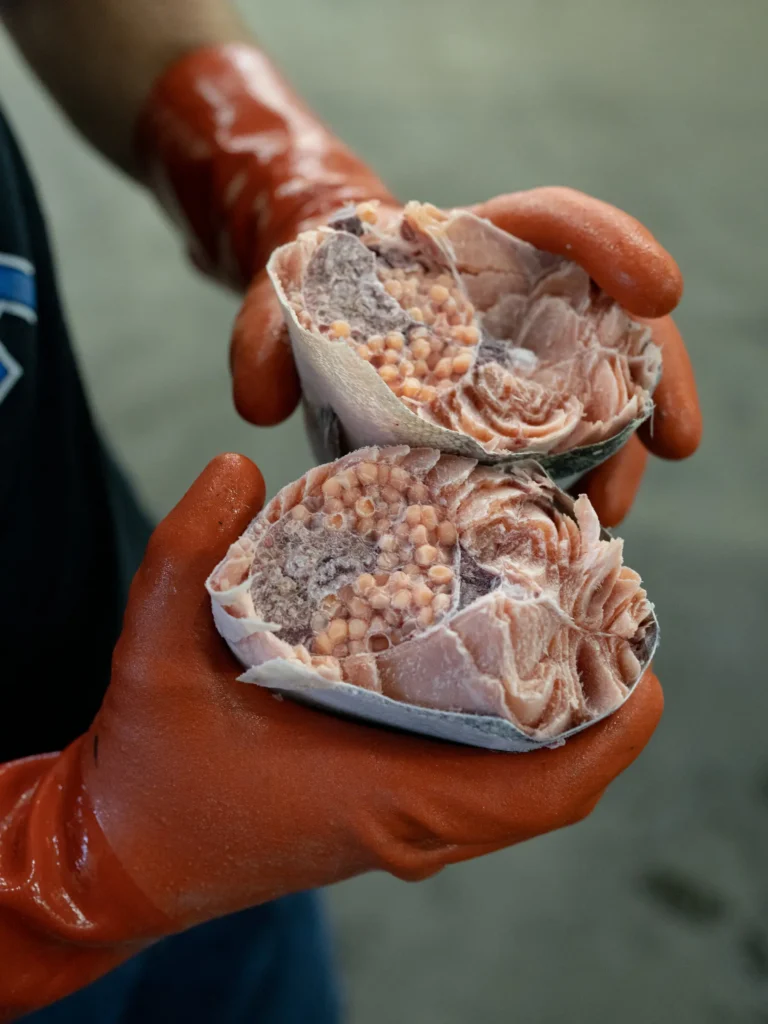
Photo by Ash Adams for New York Times
That was the plan for initial seasons: build the market for Circle-quality salmon, then eventually hand the plant back to the community to operate independently, with local employees and local profits while Circle ventures on with our industry-changing Circle I barge.
We Kept our Promises
In 2025, Circle paid $0.61 per pound for pink salmon and $0.89 per pound for chum salmon. In an industry where transparency on dockside pricing is nearly nonexistent, we think it matters to say the number plainly. Those prices reflect what the fish is actually worth and what fishermen need to sustain their operations. For the past two seasons, Circle’s fishermen have been paid significantly more than what other processors were offering — enough to cover operating expenses, invest in their vessels and gear, and make a real living from the work.
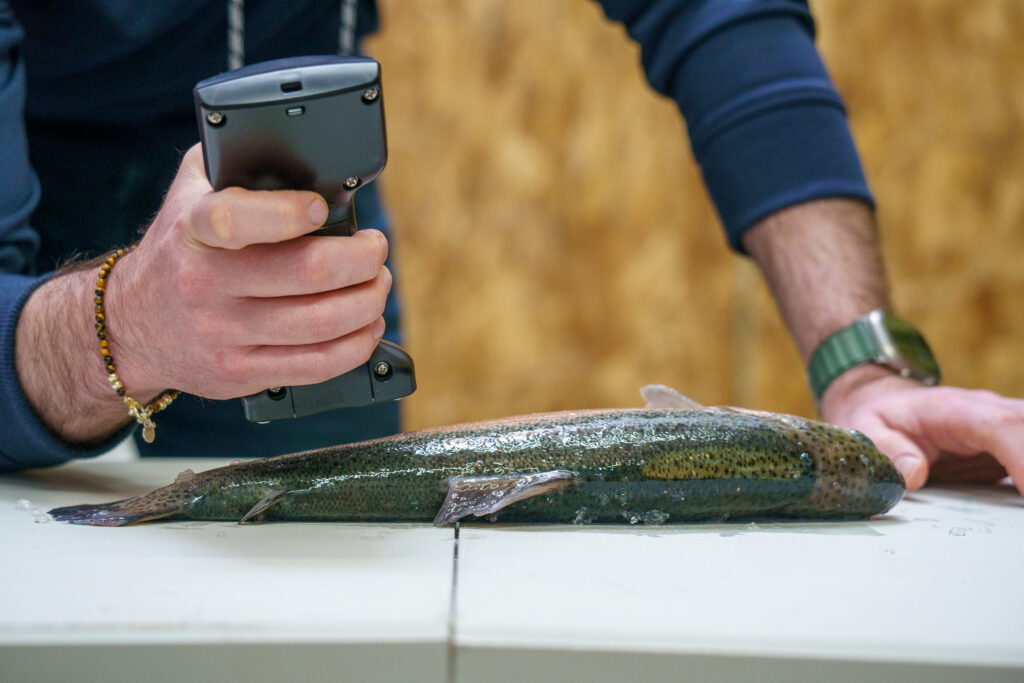
Our quality salmon is now on shelves nationwide, at Publix, Whole Foods, HEB, Harris Teeter and a growing list of retailers both in North America and abroad. The price point at retail is a fraction of what comparable wild Alaska salmon costs — not because we’re cutting corners on the fish, but because our model cuts unnecessary steps out of the supply chain.
Circle I is Coming to Metlakatla in 2026
This coming season, Circle returns to Southeast Alaska — this time with the Circle I barge operational and moored at the city dock in Metlakatla. The numbers tell the story of what’s now possible:
• 500,000 pounds of daily freeze capacity
• 1 million pounds of salmon tank capacity
• 200 tons of slush ice per day from four onboard ice makers — deliverable at 12 tons in under 3 minutes
• 10 million pounds of cold storage for transport, dramatically reducing the logistics costs that eat into fishermen’s earnings and drive up retail prices
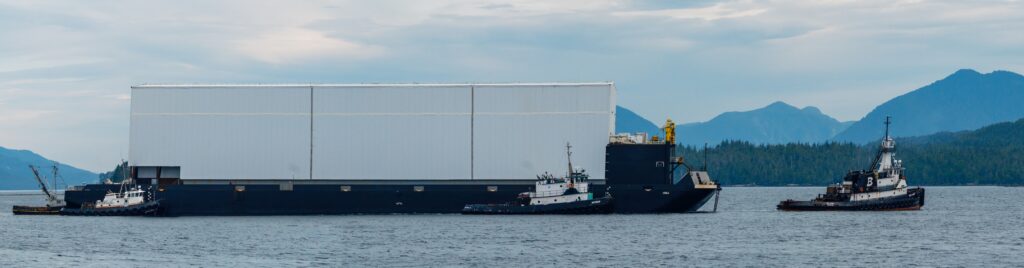
The barge allows Circle to buy fish, freeze it, and move it to market in a tightly controlled cold chain — no handoffs, no temperature compromises, no inflated middleman costs.
A Model Worth Attention
What Circle and the Metlakatla Indian Community built together over two seasons is a model that deserves attention beyond the seafood industry. A private company came to a tribal community with underutilized infrastructure, invested in upgrading it, honored a partnership, and doubled down by positioning its completed barge in the community complicit in this story and now better positioned to participate in the seafood economy on its own terms. That’s not a common story.
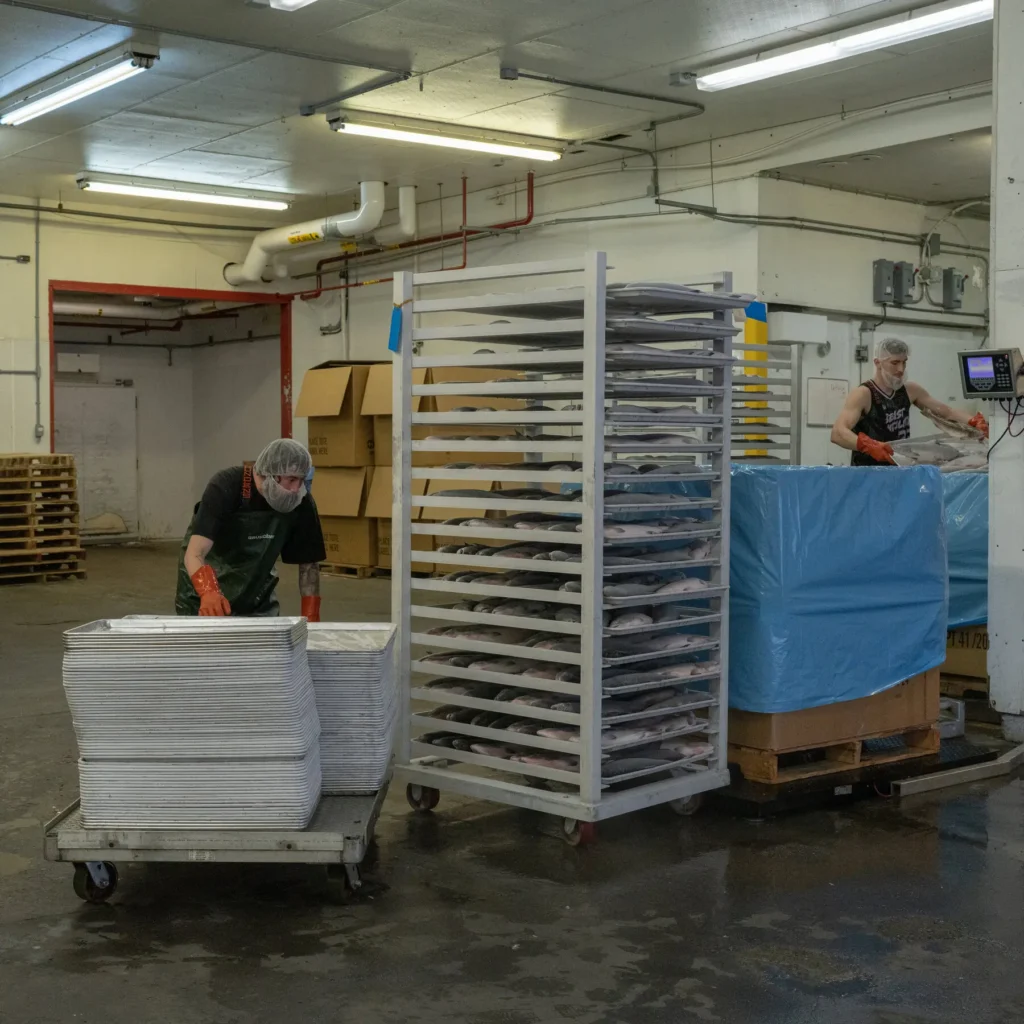
Photo by Ash Adams for New York Times
For policymakers focused on rural economic development, sustainable fisheries, and Indigenous economic self-determination, the Circle/Metlakatla partnership is a demonstration that market-based approaches and community benefit are not mutually exclusive. The tool that made it work wasn’t a grant or a subsidy — it was a willingness to pay a fair price for a quality product.
Are You a Fisherman in Southeast Alaska?
Circle Seafoods is more than just a fish processor; we’re committed to lower overhead costs, higher quality salmon, and looking out for all parties involved in the process: employees, fishermen, and Alaska communities. The economics of Alaska’s seafood industry may still be broken, but Circle is taking care to glue the pieces back together, one perfect pink salmon at a time.
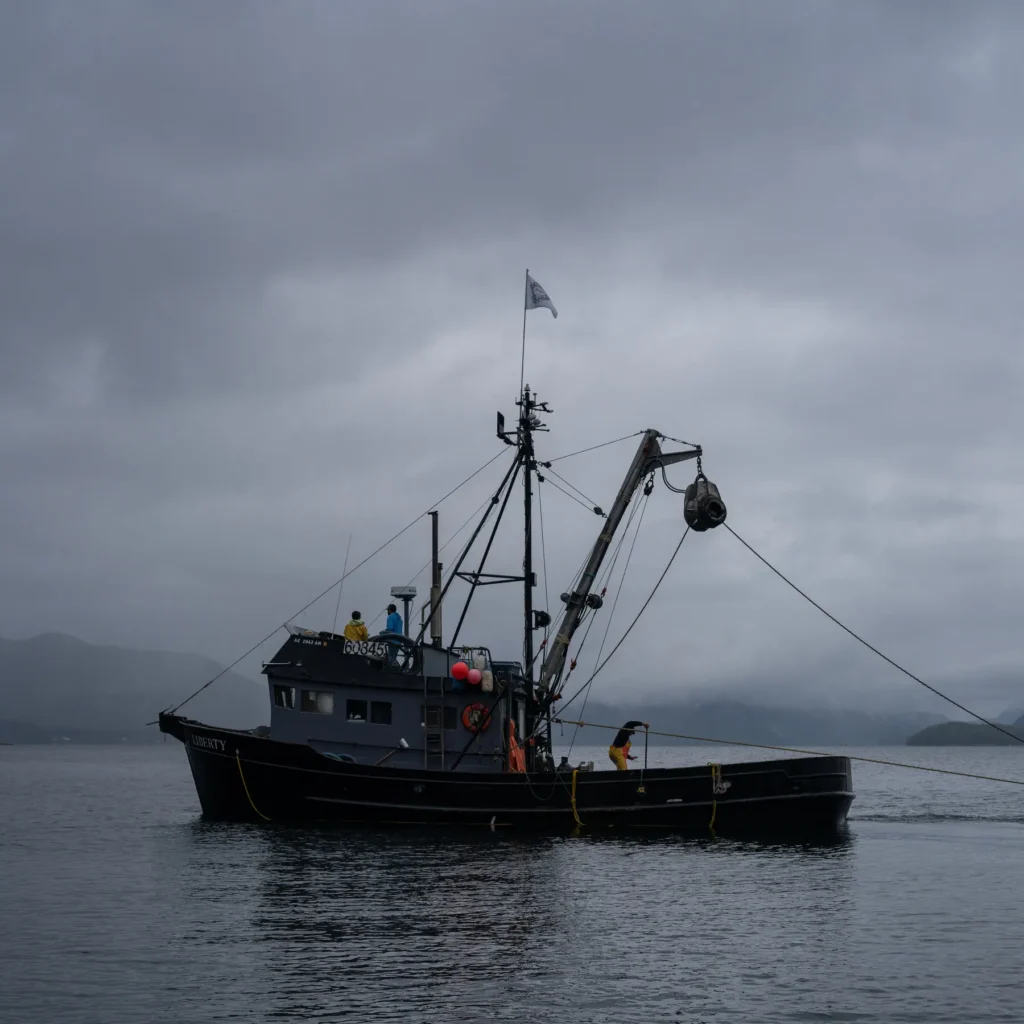
Photo by Ash Adams for New York Times
If you’re a seine fisherman in Southeast Alaska and you’re looking for a buyer who will partner with you to get a fair price that reflects what your catch is actually worth, we want to hear from you.
Register your interest and learn more about joining the Circle fleet. You can reach us directly at fleet@circleseafoods.com or (907) 615-3405.
We’re also hiring for the 2026 season — on the barge and onshore. If building something better in a difficult industry sounds like work worth doing, browse open positions at here.